Re-evaluating the Basis of Alzheimer’s Disease

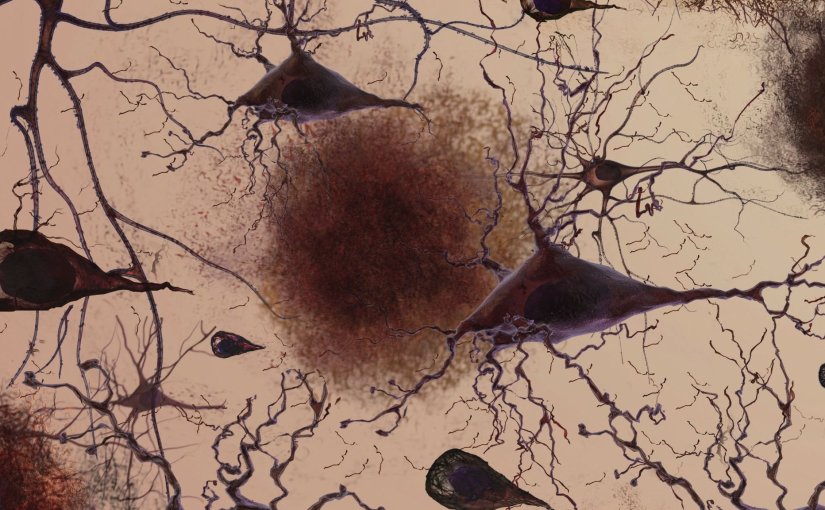
Alzheimer’s disease has garnered a notorious reputation for being a ruthless killer capable of destroying the minds of even the brightest individuals.  The disease is marked by symptoms of early neuronal loss and the formation of plaques and tangles within the brain that disrupt proper cognitive function.  The disease at its most severe can cause weight loss, seizures, and increase the likelihood of deadly infections like pneumonia. Due to the complex nature of the disease, it’s no surprise that over the years scientists have formed many hypotheses about the underlying cause of Alzheimer’s. From environmental factors to a genetic basis to underlying microbial infections, the number of hypotheses only continues to grow.

Growing up I had a vague idea that if someone in your family had Alzheimer’s you might have an increased chance of succumbing to the same fate. The potential of a genetic basis for Alzheimer’s disease is still a large area of study and scientists have now linked several genes as causative agents of early-onset Alzheimer’s disease. However, these cases are rare with only 10% being considered early-onset. The remaining 90% of diagnosed cases are (unsurprisingly) considered late-onset Alzheimer’s and have a much less prominent genetic component.

For late-onset Alzheimer’s, scientists have widely accepted a gene known as apolipoprotein E (APOE) as a risk factor for the disease. Unlike early-onset cases that have defined causative agents, APOE expression does not guarantee disease. There are three forms of APOE designated ε2, ε3 and ε4. Inheriting the ε4 variety of this protein can increase an individuals risk of developing Alzheimer’s though it does not guarantee the disease will ever develop.

More recently, the idea that Alzheimer’s may be caused by a lasting microbial infection has been making larger headlines.  This hypothesis is not new and was initially proposed by Alzheimer himself over a century ago, but its ability to gain momentum in the general public has been slow.  To date, scientists have linked roughly 16 different pathogens to Alzheimer’s with the pathogen type ranging from fungi to viruses to bacteria.  To further support the idea of an underlying infectious etiology, the protein that causes the hallmark Alzheimer’s plaque formation is antimicrobial meaning it can kill pathogens. This discovery implicates that a long-term infection could be causing the formation of Alzheimer’s plaques as a defense mechanism gone wrong.

One of the most well-established bacterial pathogens that has been implicated in Alzheimer’s disease is Porphyromonas gingivalis, a keystone bacteria in chronic periodontitis (gum disease). A study published last week by Dominy et al., presented some of the strongest evidence to date on this pathogen’s contribution to Alzheimer’s. The scientists demonstrated that blockage of a P. gingivalis by-product (known as gingipains) diminished plaque formation in the brains of mice. This data suggests that chronic infection of this bacterium, and therefore long-term production of gingipains, could contribute to Alzheimer’s plaque formation. The drug used to block the bacterial by-product in this study just completed a phase I clinical trial. While the results are not yet published, this therapeutic could potentially offer a new treatment option for those afflicted by Alzheimer’s.

All in all, new therapeutics are desperately needed for this widespread, debilitating disease. Investigating the multiple bases of disease will help broaden our understanding and hopefully our drug repertoire so that we can better manage and treat our most vulnerable populations.

Ashley

Picture from National Institute on Aging/National Institute of Health
More Bacteria, (Hopefully) No More Cancer

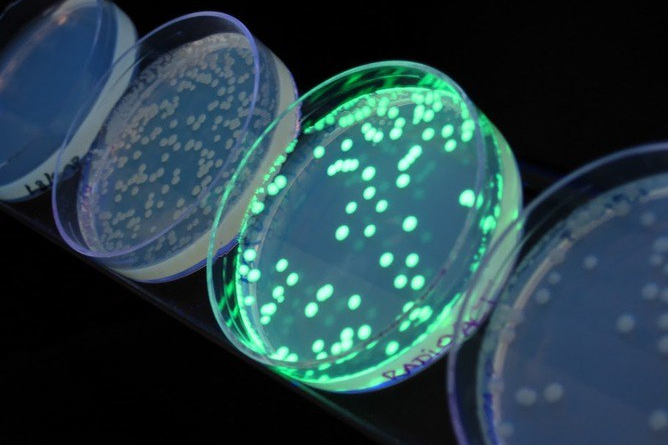
The fields of Bacteriology and Cancer Research don’t usually collide but based on the results of a recent clinical trial maybe they should.  Four years ago researchers at Johns Hopkins observed that they could shrink the size of solid tumors in an animal model by injecting them with the bacteria Clostridium novyi. Fast-forward to present day and these bacterial injections are now in the early stages of clinical trials.  The trial is relatively small with only 24 patients enrolled however, the results hold promise. Many of the patients who have been treated with the Clostridium spore injections show tumor shrinkage by the end of the trial.

The notion that bacteria could influence cancer outcomes has been a long-standing observation dating back to 1813 when French physician Vautier first noted that cancer patients infected with Clostridium perfringens, a species of bacteria closely related to the bacteria used in recent clinical trials, showed increased tumor regression.  This idea was investigated further using different bacterial models for much of the late 1800’s and early 1900’s.  Given its strong history, it was only a matter of time before a bacterial treatment option was put to the test.

However, there are limits and side effects. Patients reported symptoms ranging from relatively mild (swelling, pain at the injection site) to more serious with three patients developing sepsis, a widespread bacterial infection that can be fatal if not quickly treated. Additionally, these injections have only been tried on local, solid tumors limiting their treatment potential however, the injections have also been shown to sometimes limit tumor size throughout the body though the mechanism behind this phenomenon is not well known.

The exact mechanism of the vaccine is also unknown. Researchers propose two lines of thinking: either the bacteria is producing enzymes and other factors to break down the tumor or the bacteria are sending the immune system into overdrive and aiding in tumor clearance that way. Both proposed mechanisms could also be working simultaneously though more research will be needed to confirm this theory.

Our increased understanding of bacterial functions clearly has widespread benefits even outside the field of microbiology. Cancer research, engineering and gene editing are just a few examples of fields that have benefitted from bacterial research but the possibilities are endless and new discoveries are made all the time.  As for this clinical trial, the bacterial injections are moving forward into a new clinical trial this time as a co-treatment option with immune checkpoint inhibitors. Hopefully these injections will one day be approved, effective treatment options for cancer patients.

Ashley

(Picture from Carlos de Paz, CC BY-NC-SA)

Immunologists Win Big with Nobel Prize

Earlier this week the recipients of this year’s Nobel Prize in Physiology or Medicine were announced.  Two cancer immunologists, Dr. James Allison of the U.S. and Dr. Tasuku Honjo of Japan, took home the highly sought after award for their work on manipulating the immune system to fight off tumors. Their research has been groundbreaking and helped pave the way for new cancer therapies.

The underlying causes of cancer development vary greatly (genetics, environment, and age etc. can all play a role) but all cancers are caused by the dysregulation of cell division meaning that if cells begin to replicate in a frenzied and uncontrollable fashion they are often considered cancerous. This erratic style of division can then lead to the formation of a tumor, a clump of uncontrolled cells and well-known hallmark of cancer. Because these cancer cells replicate much faster than normal cells, they can be recognized by the body as unhealthy and an immune response is mounted to kill them.

However, tumors are tricky and can hide themselves from the immune system and even shut down an immune response that is actively forming against them. The cells can stop this response via the expression of proteins known as “immune checkpoints” on their surface. Dr. Allison and Dr. Honjo were seminal in the early studies of these kinds of proteins back in the 1990s. Dr. Allison worked extensively with an immune checkpoint protein called CTLA-4 and Dr. Honjo identified and thoroughly studied a similar protein named PD-1.

CTLA-4 and PD-1 are able to halt the anti-tumor immune response by blocking tumor recognition and thus preventing clearance. In other words, these proteins put the metaphorical brakes on the immune system therefore allowing the tumor to continue grow without penalty. To overcome these “brakes”, a treatment called immune checkpoint therapy can be used.  Immune checkpoint therapy works to inhibit these protein “brakes” like CTLA-4 and PD-1 thus allowing the body to again work towards clearing the cancerous cells.

While immune checkpoint therapies don’t work for every individual or every cancer type, they are still a staple therapeutic and created a new concept for immunotherapy treatments that have helped advance the field of cancer treatment.  These therapies have also saved and continue to save countless lives and cure individuals otherwise plagued with disease.  Additionally, since CTLA-4 and PD-1’s initial discoveries in the late 1980s and early 1990s, similar proteins are still being discovered and studied today holding the promise for even more treatment options.

Of course many individuals go into science with the goal to save lives much like Dr. Allison and Dr. Honjo have. However, science can be grueling and scientists can often question their career choices when things get tough (which unfortunately can be often). Nobel prize week is an exciting time for scientists regardless of their field of study (the Nobel prize for Physics and Chemistry were also announced this week).  Not only does this week offer a chance for very deserving scientists to receive the appropriate recognition, but it also serves as an opportunity to reinvigorate young scientists and remind them why they initially pursued a career in science.

Ashley

(Picture from Abigail Malate, Staff Illustrator for Inside Science)


Fighting Virus with Bacteria

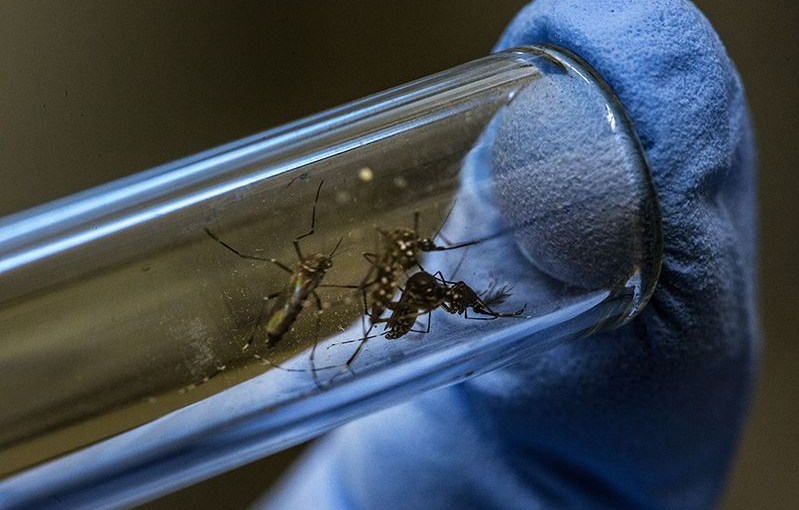
Almost four years ago scientists intentionally released millions of mosquitoes onto an Australian city in an effort to lower the incidence of arboviruses (viruses like Dengue and Zika that can be transmitted via the bite of a mosquito). While adding more mosquitoes to the population may seem counterintuitive, the addition of these insects actually did help to lower the rate of transmission of at least one arbovirus.  However, viral prevention wasn’t due to just having more mosquitoes around but moreso due to the bacteria these new mosquitoes were carrying.

The mosquitoes of interest were infected with Wolbachia spp. an insect-specific bacterium that has been known for a long time to cause cytoplasmic incompatibility between mating mosquitoes. This means that if an uninfected female mates with a Wolbachia-infected male, the resulting offspring will not be viable.  Additionally, Wolbachia infection has been shown to shorten mosquito lifespan and lower the viral infection rates of the mosquitoes themselves.  Taken together this bacterium offers an attractive and novel solution for controlling the spread of arboviruses especially given that current prevention methods like insecticides, mosquito nets, and crude treatments and vaccines, are not fully effective.

The aforementioned study, spearheaded by Scott O’Neill at Monash University, utilized Wolbachia as a method of controlling arbovirus spread and the results from this roughly four year trial hold promise.  The study followed the number of cases of Dengue, an arbovirus that causes mostly mild symptoms but can be fatal especially for children, after the release of Wolbachia-infected mosquitoes.  Only 4 cases of Dengue were locally acquired in the 4 years following mosquito release verses 54 cases in the 4 years prior.  These results become more exciting when you consider that Wolbachia infection can lower the rate of multiple arboviruses simultaneously. Although the study did not report on the incidence of other arboviruses like Zika virus and chikungunya virus, it would not be surprising to see the infection rate of these pathogens also decrease following mosquito release.

While complete eradication of the arboviruses is an enticing scenario, much more work needs to be done before this goal can come to fruition. To address this, there are multiple ongoing large-scale studies investigating Wolbachia as a means of arbovirus control especially in regions with high incidences of disease. Additionally, Wolbachia infection is also being studied for its efficacy against preventing the spread of Malaria. While Malaria is not caused by an arbovirus but instead results from infection of the Plasmodium parasite, it is still spread primarily through the bite of a mosquito and therefore could theoretically be influenced by Wolbachia infections in host mosquitoes. The results from this study are just the beginning and offer hope that someday mosquito bites can evolve from the life-threatening events they currently are for so many people to minor inconveniences.

Ashley

(Picture from Dado Galdieri featured in Nature)

Introduction to My Research and Me

Greetings to any and all (family, friends, co-workers etc.) who have ventured to my blog.  I made this blog and intend to use this platform as a chance to better my science writing and reporting skills and also to help explain science in a way that is more accessible to everyone.  Science education and outreach to me has always just meant explaining my research or a new discovery to family and close friends.  But now, as I begin the journey towards a graduate degree, I feel as though my outreach should extend beyond that (or at least try).

So, to kick off my blog, I’m going to give some background on the research that gets me excited and out of bed in the morning and also talk about the general focus of the lab that I work in.

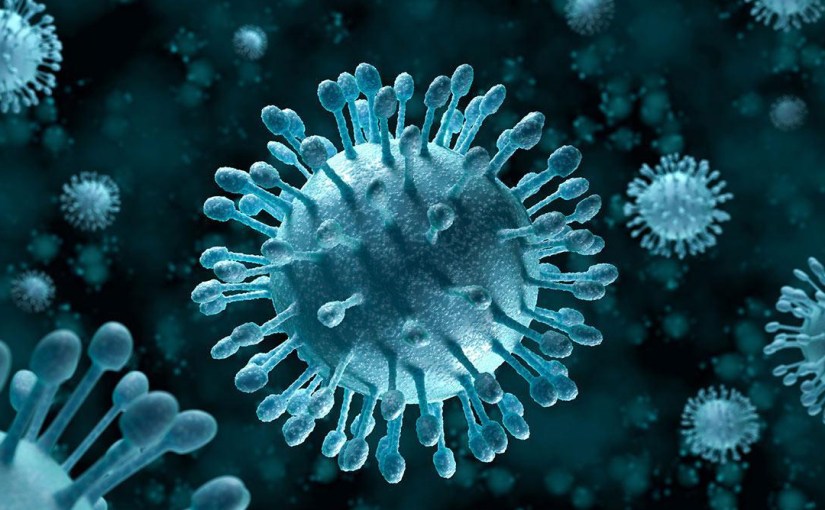
My lab is a virology and immunology lab meaning we study viruses and how they interact with the immune system. Within the many components of the immune system, our lab has a particular interest in a group of proteins called the IFITMs (which stands for Interferon-Induced Transmembrane Proteins). These IFITMs have been shown to stop the fusion of some viruses with host cells in turn helping to prevent the spread of the virus. IFITM expression is therefore considered beneficial to humans, and individuals with mutant IFITMs are more likely to get sick from viral infections.

My specific research project focuses on these IFITMs and how they could potentially play a role in the birth defects associated with microbial infection during pregnancy. For example, Zika virus caused and continues to cause such a scare because it is associated with the birth defect microcephaly (babies are born with small or underdeveloped heads). A less well-known birth defect caused by Zika virus infection is spontaneous miscarriage. However, a recent scientific breakthrough has shown these miscarriages are actually the product of our own immune response and NOT the virus! The exact  mechanism of how our immune system causes these miscarriages is still unclear and that’s where my project picks up.  We believe the IFITMs, a product of the human immune response to viral infection, may be inhibiting the formation of the placenta.  If the placenta does not form properly early in pregnancy, the fetus will not be able to survive and will be spontaneously aborted (i.e. a miscarriage will occur).  Thus by identifying the mechanism of the human immune response (specifically the IFITMs) in Zika virus-associated miscarriages, we can help prevent them from occurring.

Ashley

(Picture from Science Magazine)