More Bacteria, (Hopefully) No More Cancer

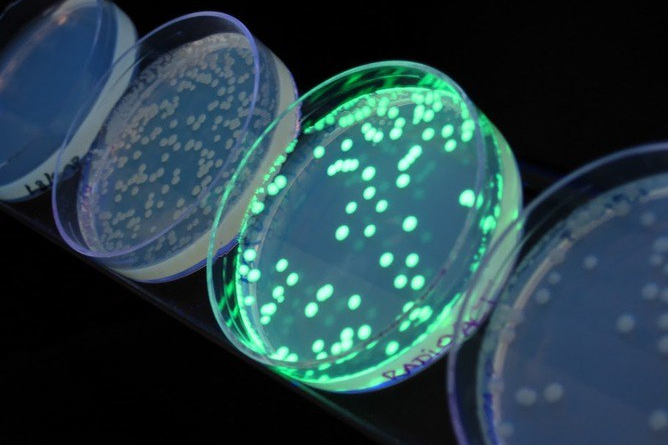
The fields of Bacteriology and Cancer Research don’t usually collide but based on the results of a recent clinical trial maybe they should.  Four years ago researchers at Johns Hopkins observed that they could shrink the size of solid tumors in an animal model by injecting them with the bacteria Clostridium novyi. Fast-forward to present day and these bacterial injections are now in the early stages of clinical trials.  The trial is relatively small with only 24 patients enrolled however, the results hold promise. Many of the patients who have been treated with the Clostridium spore injections show tumor shrinkage by the end of the trial.

The notion that bacteria could influence cancer outcomes has been a long-standing observation dating back to 1813 when French physician Vautier first noted that cancer patients infected with Clostridium perfringens, a species of bacteria closely related to the bacteria used in recent clinical trials, showed increased tumor regression.  This idea was investigated further using different bacterial models for much of the late 1800’s and early 1900’s.  Given its strong history, it was only a matter of time before a bacterial treatment option was put to the test.

However, there are limits and side effects. Patients reported symptoms ranging from relatively mild (swelling, pain at the injection site) to more serious with three patients developing sepsis, a widespread bacterial infection that can be fatal if not quickly treated. Additionally, these injections have only been tried on local, solid tumors limiting their treatment potential however, the injections have also been shown to sometimes limit tumor size throughout the body though the mechanism behind this phenomenon is not well known.

The exact mechanism of the vaccine is also unknown. Researchers propose two lines of thinking: either the bacteria is producing enzymes and other factors to break down the tumor or the bacteria are sending the immune system into overdrive and aiding in tumor clearance that way. Both proposed mechanisms could also be working simultaneously though more research will be needed to confirm this theory.

Our increased understanding of bacterial functions clearly has widespread benefits even outside the field of microbiology. Cancer research, engineering and gene editing are just a few examples of fields that have benefitted from bacterial research but the possibilities are endless and new discoveries are made all the time.  As for this clinical trial, the bacterial injections are moving forward into a new clinical trial this time as a co-treatment option with immune checkpoint inhibitors. Hopefully these injections will one day be approved, effective treatment options for cancer patients.

Ashley

(Picture from Carlos de Paz, CC BY-NC-SA)
Immunologists Win Big with Nobel Prize

Earlier this week the recipients of this year’s Nobel Prize in Physiology or Medicine were announced.  Two cancer immunologists, Dr. James Allison of the U.S. and Dr. Tasuku Honjo of Japan, took home the highly sought after award for their work on manipulating the immune system to fight off tumors. Their research has been groundbreaking and helped pave the way for new cancer therapies.

The underlying causes of cancer development vary greatly (genetics, environment, and age etc. can all play a role) but all cancers are caused by the dysregulation of cell division meaning that if cells begin to replicate in a frenzied and uncontrollable fashion they are often considered cancerous. This erratic style of division can then lead to the formation of a tumor, a clump of uncontrolled cells and well-known hallmark of cancer. Because these cancer cells replicate much faster than normal cells, they can be recognized by the body as unhealthy and an immune response is mounted to kill them.

However, tumors are tricky and can hide themselves from the immune system and even shut down an immune response that is actively forming against them. The cells can stop this response via the expression of proteins known as “immune checkpoints” on their surface. Dr. Allison and Dr. Honjo were seminal in the early studies of these kinds of proteins back in the 1990s. Dr. Allison worked extensively with an immune checkpoint protein called CTLA-4 and Dr. Honjo identified and thoroughly studied a similar protein named PD-1.

CTLA-4 and PD-1 are able to halt the anti-tumor immune response by blocking tumor recognition and thus preventing clearance. In other words, these proteins put the metaphorical brakes on the immune system therefore allowing the tumor to continue grow without penalty. To overcome these “brakes”, a treatment called immune checkpoint therapy can be used.  Immune checkpoint therapy works to inhibit these protein “brakes” like CTLA-4 and PD-1 thus allowing the body to again work towards clearing the cancerous cells.

While immune checkpoint therapies don’t work for every individual or every cancer type, they are still a staple therapeutic and created a new concept for immunotherapy treatments that have helped advance the field of cancer treatment.  These therapies have also saved and continue to save countless lives and cure individuals otherwise plagued with disease.  Additionally, since CTLA-4 and PD-1’s initial discoveries in the late 1980s and early 1990s, similar proteins are still being discovered and studied today holding the promise for even more treatment options.

Of course many individuals go into science with the goal to save lives much like Dr. Allison and Dr. Honjo have. However, science can be grueling and scientists can often question their career choices when things get tough (which unfortunately can be often). Nobel prize week is an exciting time for scientists regardless of their field of study (the Nobel prize for Physics and Chemistry were also announced this week).  Not only does this week offer a chance for very deserving scientists to receive the appropriate recognition, but it also serves as an opportunity to reinvigorate young scientists and remind them why they initially pursued a career in science.

Ashley

(Picture from Abigail Malate, Staff Illustrator for Inside Science)