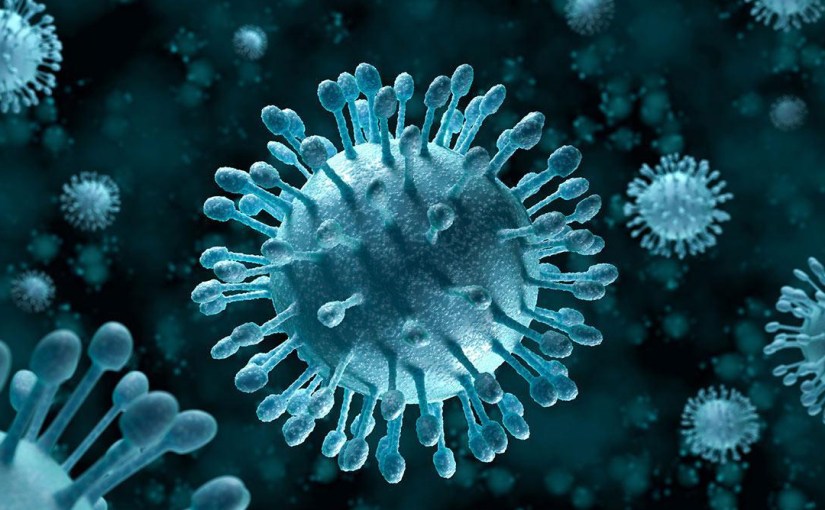
Greetings to any and all (family, friends, co-workers etc.) who have ventured to my blog. I made this blog and intend to use this platform as a chance to better my science writing and reporting skills and also to help explain science in a way that is more accessible to everyone. Science education and outreach to me has always just meant explaining my research or a new discovery to family and close friends. But now, as I begin the journey towards a graduate degree, I feel as though my outreach should extend beyond that (or at least try).
So, to kick off my blog, I’m going to give some background on the research that gets me excited and out of bed in the morning and also talk about the general focus of the lab that I work in.
My lab is a virology and immunology lab meaning we study viruses and how they interact with the immune system. Within the many components of the immune system, our lab has a particular interest in a group of proteins called the IFITMs (which stands for Interferon-Induced Transmembrane Proteins). These IFITMs have been shown to stop the fusion of some viruses with host cells in turn helping to prevent the spread of the virus. IFITM expression is therefore considered beneficial to humans, and individuals with mutant IFITMs are more likely to get sick from viral infections.
My specific research project focuses on these IFITMs and how they could potentially play a role in the birth defects associated with microbial infection during pregnancy. For example, Zika virus caused and continues to cause such a scare because it is associated with the birth defect microcephaly (babies are born with small or underdeveloped heads). A less well-known birth defect caused by Zika virus infection is spontaneous miscarriage. However, a recent scientific breakthrough has shown these miscarriages are actually the product of our own immune response and NOT the virus! The exact mechanism of how our immune system causes these miscarriages is still unclear and that’s where my project picks up. We believe the IFITMs, a product of the human immune response to viral infection, may be inhibiting the formation of the placenta. If the placenta does not form properly early in pregnancy, the fetus will not be able to survive and will be spontaneously aborted (i.e. a miscarriage will occur). Thus by identifying the mechanism of the human immune response (specifically the IFITMs) in Zika virus-associated miscarriages, we can help prevent them from occurring.
Ashley
(Picture from Science Magazine)

 Science Blogs from Zani Brainy